Sunday, October 2, 2011

Hearing and Heeding: General Conference Reactions

Hello friends!

It is truly hard to believe that another six months have passed away, but they surely have, as will the next six months surely pass in a whirlwind.  I think that the goal is develop traction that can fuel improvement and progression, and hopefully this can be accomplished in a spiritual sense in between meetings of the General Conference of the Church.  My hope is that we all can use the words of the prophet and Apostles to propel us further, rather than to just maintain a level of spirituality at which we seem comfortable.  With that said, please enjoy my reaction to selected messages given this weekend by President Monson and other general authorities.


SATURDAY MORNING SESSION
Without question the most memorable announcement on Saturday morning was the announcement by President Thomas S. Monson that the Provo Tabernacle which burned down last December would be converted into the second temple in that city (artist's rendering at right).  I would to not like to neglect this truly historic announcement, but admit that there was doctrine more pressing that came from yesterday morning.  Of note were Elder Richard G. Scott's wonderful illustration of the importance of scripture study, and Elder L. Whitney Clayton's reaffirmation that no unhallowed hand will keep the work of the Lord from progressing; however, I would like to focus on President Dieter F. Uchtdorf's talk on the significance and insignificance of man.

President Uchtdorf began by explaining that modern science has shown that man truly is nothing; the stars in the sky that we can observe with modern telescopes outnumber the sands of the earth.  And even in the grand Plan of Salvation, our existence on this earth is but a small moment.  However, in spite of this knowledge we also know that the vast universe was created that we might reach our potential as sons and daughters of God.  We should remember that the Lord uses a scale very different than that of the world to measure the worth of souls, and that even when we feel all alone, Heavenly Father has not forgotten us.  I know this of myself to be true, and was touched as I received that reaffirmation of truth from a prophet of God.

SATURDAY AFTERNOON SESSION

I must admit that over the last several months I have thought more and more on the doctrine of the family, and its importance in the great Plan of Happiness.  With that said, it's natural that I was inspired yesterday afternoon by the first two talks given, by Elders Bednar and Andersen, respectively.

Elder David A. Bednar spoke on the Spirit of Elijah, and that the greatest responsibility with which the Lord has entrusted us is that  of seeking after our dead, that they may too be partakers of the Heavenly Gift.  When we perform family history work and vicarious temple ordinances we are direct fulfillment of the prophecy of Elijah, turning our hearts to the fathers who have come before us.  How great a work is this!  I know that as we strive to reach across this generational gap, we will be blessed to appreciate our lineage in even greater measure.

Elder Neil L. Andersen spoke on the importance of parenthood, and specifically motherhood.  He said that how many children to have is a sacred decision between husband, wife, and the Lord, and that motherhood specifically is not a hobby, but is a divine calling.  We should not be judgmental of others' abilities to fulfill this calling, but rather should seek to create a spiritual sanctuary for our own families within the home.  We should exercise faith, and not put obstacles in the way of raising righteous posterity.

PRIESTHOOD SESSION
Over the last few Priesthood Sessions there has been an extra focus placed on the moral decay that is present all around us, and there have been bold and fervent voices of warning against getting trapped by the lures of the adversary to be sent into paths that will disqualify us from Priesthood service.  None were more bold than Elder Jeffrey R. Holland, who seems to always deliver a message that shakes the very core of the individual. He spoke candidly, beginning by saying that Satan is real, and is the very personification of evil.  Elder Holland also made clear that Satan is eternally opposed to the work of God, and although he knows that in the end he will lose, the devil will try to take down as many with him as he can into that "gulf of misery and endless woe" (see Alma 26:6).  Moreover, Satan delights if he can but bind the tongue of the faithful.

In the context of missionary service, we must not let this happen.  Our testimonies are too great, our light too bright to be hid from the world who is "kept from the truth because they know not where to find it" (D&C 123:12).  We cannot think that we can play on the side of Satan, and then expect to be able suit up for the Savior when the hour of service arrives.  While Elder Holland applied this specifically to missionary service, this applies equally to any calling in the Priesthood.  We all must be better prepared for day when our name is called.

 SUNDAY MORNING SESSION
This morning I loved hearing Elaine S. Dalton's talk on how to raise righteous daughters of God, and that we must "be loyal to the royal within [us]."  While this talk was inspiring, I'd like to focus my reaction from this session on the words from our beloved prophet, President Thomas S. Monson.


President Monson again reiterated that the moral compass of society is rapidly evolving, and that today we are seeing the same reckless abandon for moral capital that we today see for financial capital.  President Monson affirmed that though this may be the case in the world, morality is NOT passe,  for the laws of God are unchanging and immovable.  It is, in fact, a great solace to know that in the midst of constant change, our Father in Heaven is an unchanging constant, the same yesterday, today, and forever.  We should strive to follow God's laws, as (just as in times old) nothing brings more joy and peace than the Spirit that comes from putting off the natural man.  As the world has moved so far away from the spiritual, we must be ever vigilant.  President Monson went on to state that we will be able to overcome if we have the Gospel in our core, and the love of the Savior in our hearts.  Though Satan desires to have us, we will be the Lord's as we daily turn to Him, and strive to draw near to Him.  Amidst all the turmoil we see in the world today, we should not fear as we strive, for the Lord will be with us.

SUNDAY AFTERNOON SESSION
The fifth and final session of conference was as equally enlightening as the other previous four.  I was impressed by Elder J. Devn Cornish's words that honesty is essential when making requests from God.  I was informed and inspired by Elder Dallin H. Oaks' talk on what it means to really believe in Christ.  While all the talks were faith-promoting, I would like to focus on the words of Elder Matthew O. Richardson, Second Counselor in the General Sunday School Presidency.  This talk had special meaning for me, as Elder Richardson was once my religion teacher at BYU before being called as a general authority.

 Elder Richardson spoke today on the importance of being real: a real missionary, real priesthood holder, real member of the Church.  Part of being real in this church is the ability to teach others, and doing so by the Spirit, not in front of or behind the Spirit.  This means that we teach in line that the Spirit may teach, having put in our preparation time, but being open to the needs of those whom we teach.  Elder Richardson stated that teaching by the Spirit entails understanding that the Holy Ghost teaches each individual in a very personal way, and that he teaches by inviting, inspiring, and encouraging us to act.  As teachers we must utilize the Spirit to invite those we teach to learn for themselves, and to understand that learning comes line upon line, precept upon precept.  Elder Richardson ended by saying that we desperately need this type of real teaching and learning.

CONCLUSION
I hope you have enjoyed this brief synopsis of those things I found inspiring this weekend.  I know that the Brethren are ordained prophets, seers and revelators, and that they receive divine guidance from God for us.  I know that they see that which the world cannot, and are compass that we can follow in these days of turmoil and strife.  Let us be humble enough to hear their words, and with that same humility have strength to act in accordance with their words as taught by the Holy Spirit.

Have a great week!

Sunday, September 25, 2011

Best of Me: The Atonement in the Atonement

Hello my friends!

It is my hope that the last couple of weeks have provided you with the blessings which you've sought. For me, I am grateful for the Lord's hand in my life, and look forward with an eye of faith to next weekend, as the Prophet, the Quorum of the Twelve Apostles, and other General Authorities of the Church will address them. I know that they receive revelation for us, directly from the Source of all truth. Until next week, please enjoy a post from January 2010 which highlighted the importance of viewing the Atonement in all that we do, and how its power was made manifest in the Atonement itself.

THE ATONEMENT IN THE ATONEMENT

In everyday life we encounter anomalies where two similar or equal entities are nested in one another. In the psychological field, these are often referred to as "metas." For example, a meta-analysis is the study of many experiments. Likewise, meta-cognition refers to thinking about thinking. This week I would like to pose a similar comparison to the Atonement of Jesus Christ, where the very essence of that supernal act was manifest in the act itself. For consistency purposes, let's call it "Meta-Atonement."

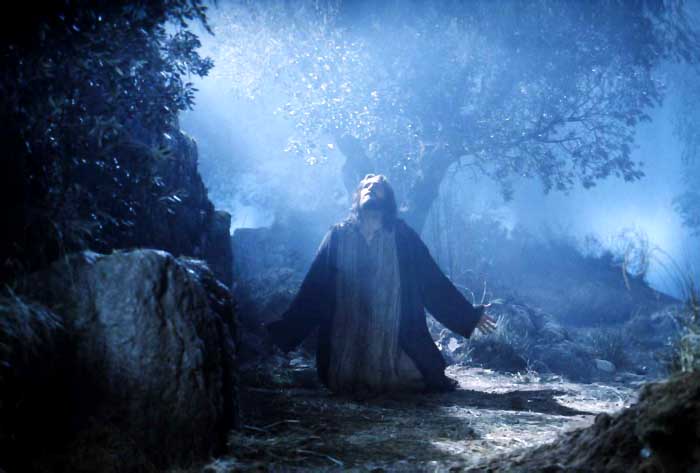
Let me show you what I mean. We read in Mark Chapter 14:

And they came to a place which was named Gethsemane: and he saith to his disciples, Sit ye here, while I shall pray.
And he taketh with him Peter and James and John, and began to be sore amazed, and to be very heavy;
And saith unto them, My soul is exceeding sorrowful unto death: tarry ye here, and watch.
And he went forward a little, and fell on the ground, and prayed that, if it were possible, the hour might pass from him.
And he said, Abba, Father, all things are possible unto thee; take away this cup from me: nevertheless not what I will, but what thou wilt.
And he cometh, and findeth them sleeping, and saith unto Peter, Simon, sleepest thou? couldest not thou watch one hour?
Watch ye and pray, lest ye enter into temptation. The spirit truly is ready, but the flesh is weak.
And again he went away, and prayed, and spake the same words.
And when he returned, he found them asleep again, (for their eyes were heavy,) neither wist they what to answer him.
And he cometh the third time, and saith unto them, Sleep on now, and take your rest: it is enough, the hour is come; (Mark 14:32-41)

The first thing that I would like to say is that the Atonement was wrought in order to satisfy the demands of justice (Mosiah 15:9, Alma 34:16) that were placed upon the whole human race as result of the Fall of Adam. Both the Fall and Atonement were necessary for us to first come to earth and obtain bodies, and then to overcome the physical (which includes the Resurrection) and spiritual imperfection that is characteristic of the mortal experience.

With that said, I second ask you to take note of the action of the Apostles Peter, James, and John on this fateful and necessary evening in early Spring. Christ asked them to be vigilant, but they were unable, even on multiple occasions. Now, many would harp in these three (who I might add were possibly Jesus' three most dedicated disciples at the time) because they could not stay awake. In like manner, many ridicule and vilify Peter who later denied knowing Christ thrice as a fulfillment of prophecy. However, placing such blame in my mind is not entirely appropriate, and is evidence of our own imperfections. I say this because such acts that we find in the Gospels were the absolute essence of the Atonement, illustrating man's need for it. The three Apostles were physically unable to hold on, as Jesus passed through the Atonement alone. It was those very imperfections for which the Atonement was performed, and in mind these things were almost necessary that Christ could empathize perfectly the state in which we find ourselves on a daily basis. This is "Meta-Atonement." How grateful am I for this example, as well as the entire gift that is the Atonement of Jesus Christ! In April, 2009, Elder Jeffrey R. Holland of the Quorum of the Twelve Apostles said the following:

Brothers and sisters, one of the great consolations...is that because Jesus walked such a long, lonely path utterly alone, we do not have to do so. His solitary journey brought great company for our little version of that path—the merciful care of our Father in Heaven, the unfailing companionship of this Beloved Son, the consummate gift of the Holy Ghost, angels in heaven, family members on both sides of the veil, prophets and apostles, teachers, leaders, friends. All of these and more have been given as companions for our mortal journey because of the Atonement of Jesus Christ and the Restoration of His gospel. Trumpeted from the summit of Calvary is the truth that we will never be left alone nor unaided, even if sometimes we may feel that we are. Truly the Redeemer of us all said: “I will not leave you comfortless: [My Father and] I will come to you [and abide with you] (John 14;18).

May you all have a great week, thinking on the Atonement, and its infinite applicability!

----

Have a great week!

Sunday, September 11, 2011

With The Love that Remains


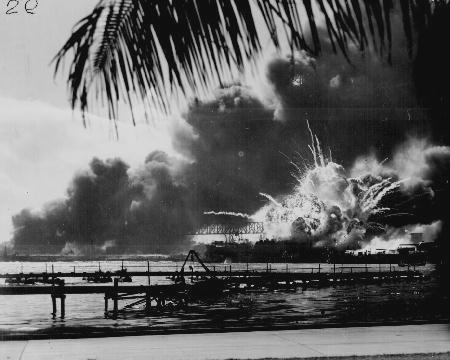
Ten years ago today the world was shocked by the events that took place on what is now commonly known as "9-11." Those numbers will forever be engrained in the minds and hearts of those who were old enough to understand the meaning of the terrorist attacks on that day, serving as a reminder about how truly fragile freedom can be, and the high cost that we all must pay to preserve those freedoms. For those who will not personally remember what happened that fateful day, it will be much like the majority of people today who don't recall another infamous day, 12-7-1941, or the day that Japan attacked Pearl Harbor, and thrust the United States into World War II. I was not there, and I don't know anyone who was there; and to the best of my knowledge I don't know anyone who knows someone who was there. That event for me is just a conglomeration of media and commentary that I use to form my opinion of what happened. While that suffices me, it does no justice to the sentiment that drove the people of the time, united in the defense of their liberty, homes, and their way of life.

Likewise, many who have only a tertiary understanding of the September 11th attacks will not feel what those in New York and Shanksville and Arlington felt, and will not feel what the rest of us felt. It will take their own September 11th to truly learn what it feels like to have under attack that which they hold most dear. Nevertheless, we can through our testimonies teach others what it feels like to experience such hardship and uncertainty, and to escape such times unscathed and even stronger than before.

In previous posts I have talked about "forgetting," and how that relates to the great Plan of Happiness that Heavenly Father has set in motion. I believe that the best way that we can teach through our testimony unto the rising generation is through the Spirit that we exude as a function of our knowledge if this Plan. Using the love that remains with us from faith-confirming and faith-promoting experiences, let us not give up on those who come after us, but in stead strive to teach them true doctrine that will enable them in turn to find their place in the Plan.

I know that we are all in the arms of the Savior, and that He has the power to heal our spiritual, emotional, and even physical wounds through the supernal gift of the Atonement. The Atonement is central to the Plan, and should be central to the message of love that we convey. Events like those of September 11th, 2001 are not new in the trauma, anguish, and heartache that they cause, and in fact continue to happen on a daily basis. The Book of Mormon is filled with stories of tragedy, war, famine, plague and pestilence as well. The lasting legacy of the Jaredite people is likely their ability to quite literally and completely self-destruct, to which there were "howlings and lamentations, that they did rend the air exceedingly. (Ether 15: 16)" Similarly, the Nephites who remained after the prophesied destruction which marked the Savior's crucifixion were said to be "howling and weeping continually" as they endured three days of complete and utter darkness (3 Nephi 8: 23).

In spite of impending doom and gloom, I know that we may persevere through the power that rests in the Savior. When we sin we feel utterly alone, and feel that the light of the Savior has gone from us. In that precise moment the Master of Lies, even Satan strives to have us believe that we cannot recover the light we lost. I believe that this is where we must focus our efforts for the new generation which will undoubtedly experience hardship at a level that we may not understand. But we do understand how they will feel, and we do understand that the "Son of Man hath descended below them all. (D & C 122: 8)"

As we strive to remember that we are not "greater than he," we will begin to see that God has purpose in destruction and pestilence. We will see that those righteous who have suffered death are received by the Lord "unto himself, in glory," and that for the rest us "God will have a humble people. ("Beware of Pride," Ezra Taft Benson, Ensign, May 1989)" Let us, with the love that remains after our hardship look to the Savior, that we may have strength to share our love of Him and the Plan with those around us. And on this special day, let us teach that love prevails over all toil and strife, and that in the end, the Lord's humble people whom He calls His own will prevail as well.

Have a great week!

Sunday, August 21, 2011

Post 101: Turning Our Hearts


I am happy to announce that this is officially the 101st post on this blog! Exciting, I know. To celebrate, I've decided to title this post "Turning Our Hearts" as an encapsulation of one of the great purposes of our existence. Let's start in 2 Nephi:

“And now that my soul might have joy in you, and that my heart might have gladness because of you, that I might not be brought down with grief and sorrow to the grave, arise from the dust, my sons, and be men, and be determined in one mind and in one heart, united in all things, that ye may not come down into captivity;

“…Awake my sons; put on the armor of righteousness. Shake off the chains with which ye are bound, and come forth out of obscurity, and arise from the dust."

2 Nephi 1: 22, 24 (emphasis added)

The Prophet Lehi here talks about a piece of what it means to be a true man, being "united in all things." We know from the scriptures that unity is equated with godliness, and that through unity we may become worthy to be claimed by the Savior (see D & C 38:21, among others).

Quite possibly the most important type of unity comes through turning our hearts to generations past, present, and future, through often diverse efforts. For those in the present, we improve our links through family prayer and scripture study, activities, projects, and other often grueling efforts [just ask Barack Obama what it's like to unify a people!]. For our sons and daughters yet to come, the best way to link ourselves to them is through building a foundation of righteousness, which in my opinion involves a scrupulous inward look at character flaws, and effectively turning our hearts over to the Savior in love and hope that we may be cleansed in time. For our ancestors, we must needs develop the Spirit of Elijah, taking advantage of the sealing power given to and subsequently delegated by a prophet of God. Near the end of the Old Testament we read:


Behold, I will send you Elijah the prophet before the coming of the great and dreadful day of the Lord: And he shall turn the heart of the fathers to the children, and the heart of the children to their fathers,
lest I come and smite the earth with a curse. --Malachi 4: 5-6

This "turning" of which Malachi prophesies happens in the temples of God, where the sealing power may be used to perform sacred ordinances for those who've passed on without having received them. The prophet Joseph Smith shed some light on this scripture:

“…It is sufficient to know, in this case, that the earth will be smitten with a curse unless there is a welding link of some kind or other between the fathers and the children, upon some subject or other…For we without them cannot be made perfect; neither can they without us be made perfect…for it is necessary in the ushering in of the dispensation of the fullness of times, which dispensation is now beginning to usher in, that a whole and complete and perfect union, and welding together of dispensations, and keys, and powers, and glories should take place, and be revealed from the days of Adam even to the present time.” --D& C 128: 18

This welding between the fathers and children across all generations of time is achieved only through the active use of the sealing power, that is, the power of the Priesthood to perform vicarious ordinances for those who have passed on without having received the opportunity to accept these ordinances in mortality. These vicarious ordinances are realized only in the holy temples, sacred house of God set apart for this purpose.

No one understood the importance of welding together generations in this vein than father Lehi, who in a parting blessing to his son, Joseph, gave what in my opinion is one of the most poetic passages in the Book of Mormon. In this blessing (found in 2 Nephi 3) Lehi compares Joseph of Egypt to his son, who also was a righteous youth who received harsh treatment from his older brothers. Lehi then quotes Joseph of Egypt, who prophesied of the coming forth of the Book of Mormon by the hand of Joseph Smith, who would be a great prophet "like unto Moses."

I testify that Joseph Smith was and is a great prophet of God, and that by and through him the fullness of the Everlasting Gospel was restored. It is through that Restoration that we know of the welding work that we must perform while here on the earth, striving to turn our hearts for generations to come. Let us all work to be a little more like the Savior, doing for others what they cannot do for themselves, being a healing influence in the lives of all whom we meet.

Have a great week!


Sunday, August 14, 2011

Mental Health and the Gospel, Part II--Answering the Unasked Questions


As the time has passed, my posts have turned more into "monthly" conceptualizations; nevertheless, it is still a treat to share when I get the chance. Today I'm happy to share the second half of my conceptualization of the connection between mental health and the Gospel. We'll start today with a scripture chain, and use logic and the Spirit to deduce their in importance in this specific context.

FREE ACCORDING TO THE FLESH

Wherefore, men are free according to the flesh; and all things are given them which are expedient unto man. And they are free to choose liberty and eternal life, through the great Mediator of all men, or to choose captivity and death, according to the captivity and power of the devil; for he seeketh that all men might be miserable like unto himself.
--2 Nephi 2: 27

We know that all good things come from God, and that which is from God entices us to do good continually (see Moroni 7: 12-13). Assuming that "liberty and eternal life" are both good things, captivity must not be good, and therefore of the adversary. This coincides with the second portion of the above scripture that states that captivity and death are wrought upon us by the power of the adversary, and that these two things make us miserable.


TO WHOM ARE WE BOUND?

And there are also secret combinations, even as in times of old, according to the combinations of the devil, for he is the founder of all these things; yea, the founder of murder,
and
works of darkness; yea, and he leadeth them by the neck with a flaxen cord, until he bindeth them with his strong cords forever.
-- 2 Nephi 26: 22

Efforts are constantly being made for our attention. There are two polarizing influences, both promising greater things upon our yielding to them. If we believe that good and evil, God and the devil are opposites, then we must also believe that the mechanisms by which they work are opposite. This must mean that if the devil works by "flaxen cords" then God must work subtly as well. Using the flaxen cords metaphor, we see that as the devil slowly influences us that we are less and less able to act for ourselves because we are "bound," the cords becoming stronger and stronger as they multiply. This acting for ourselves is also referred to as agency, and we loose agency as we choose the adversary, offering ourselves as captives.

THE "SO WHAT?" FACTOR

But this much I can tell you, that if ye do not watch yourselves, and your thoughts, and your words, and your deeds, and observe the commandments of God, and continue in the faith of what ye have heard concerning the coming of our Lord,
even unto the end of your lives, ye must perish. And now, O man, remember, and perish not.
--
Mosiah 4:30

So what should we do about this knowledge? If we follow the admonition of King Benjamin, then we ought to "watch" ourselves, and our thoughts, and our words and deeds. This can be extremely difficult if we are bound by strong cords, and often is only made possible through the help of trained professionals. This scripture is justification that therapy is a tool of the Atonement, as far as it helps individuals to self-monitor with the end of unhooking individuals from those strong cords, giving them the agency to exercise moral agency.

THE UNASKED QUESTIONS

With that established, let's think about some questions that often go unanswered, often because it's not acceptable to ask them:

Q: Is it a sin to see a therapist?


A: In most cases, certainly not. A good therapist meets clients at their own beliefs, not trying to change religious belief systems. In fact, a good therapist will help the individual fulfill King Benjamin's admonition without even knowing it.

Q: When is it times to start seeing a therapist on top of meeting with the bishop?

A: This is something that should be felt out between every bishop and member, as the bishop acts as a common judge in Israel, helping the member access the gift of the Holy Ghost more effectively. Both parties involved should treat the situation with humility: the member should be humble enough to heed the counsel of the bishop to potentially seek professional help as revelation from God, and the bishop should express humility in recognizing that certain issues cannot handled by only his ecclesiastical counseling. Other questions to consider when deciding on adjunct therapy are 1) How long-standing is the issue at hand, 2) How much impairment does the issue cause and 3) How much and it what ways does the issue effect other people. As a clarification, impairment refers to the inability to make proper relationships and perform normal life activities like hold a job, support a family, or balance a budget.

Q: How can mental illness NOT be the fault of the individual suffering from it?

A: There are many instances in which the sins and misgivings of others (sometimes even generations prior) affect the lives of their posterity, which puts the child on an unequal playing field before even given the chance to account for him or herself. Examples of this include fetal alcohol syndrome (FAS), some traumatic brain injuries, and notably borderline personality disorder and post-traumatic stress disorder (PTSD). Because we often do not know the extent to which individuals have suffered, it is important to treat mental illness with sensitivity, not first assuming that it was the fault of the individual suffering.

Q: How do I best help my friend or loved one with mental illness?

A: Before we go about helping others, it is important to follow the Spirit and ask for the Spirit as we decide to reach out. We are promised help as we serve others, and our efforts will be galvanized as we 'counsel with the Lord in all our doings.' (see Alma 37: 37) Here are some additional suggestions:

We should follow the counsel of the Savior to 'judge not, lest [we] be judged, (see Matthew 7:1)' for we are all broken in some ways.

We should strive to "look on the heart (Samuel 16:7)", and include for "outward appearance" such things as behaviors, words and deeds, as well as flawed perceptions of the character of that individual.

As everyone has the light of Christ or better, we should remember that there is core deep within everyone that is of God, and we should strive to locate and accentuate that godliness on others.

We should also seek the help of others in our helping efforts, lest we become burnt out, or lest we deprive others of the opportunity to serve.

But above all, we should lend a listening ear, willing to "mourn with those who mourn, and comfort those who stand in need of comfort. (Mosiah 18:9)"


It is my testimony that the Lord has placed us hear on this earth with talents that are meant to continually bless the lives of others, including our own. Let us be humble enough to seek proper help as the need arises, and let us be humble enough to follow the Spirit as we seek to be that blessing in the lives of others.

Have a great week!

Sunday, July 17, 2011

Mental Health and The Gospel Part I--Healing through the Atonement


For some time I have let incubate in my mind thoughts on how to best reconcile the teachings of the restored Gospel with philosophy and practice that I continually learn as a grad student in clinical psychology. These two camps are sometimes divergent, but are actually more similar than one might think; in fact, I have come to believe that part of my earthly mission is to dispel among church members the oft-held myth that the study of behavior and the mind is antithetical to the study of the Savior. The only antithetical thing about that statement is the statement itself. The next two posts will be dedicated to shedding light on this mystery of the Kingdom. My hope is to empower the weakest of us, and inspire the strongest of us to find the Savior in even the greatest and least understood of our challenges. I stress that these thoughts are purely my own; as such, I invite all who read to ponder them, and follow the Spirit while interpreting the words that follow.

In 1986 then Elder Boyd K. Packer, a master instructor, shared this nugget:

"True doctrine, understood, changes attitudes and behavior. The study of the doctrines of the Gospel will improve behavior quicker than a study of behavior will improve behavior."

To the untrained eye, this quote by President Packer may seem to deflate my ideas before they even get moving; the answer to all the ails that we feel must be that if we just study and study and study, we will be guided to better behavior. I believe this to be true, for it has worked in my own life. Some months ago I was inspired to study twice a day in stead of my post-mission tradition of just reading at night; the results have been remarkable, and I have seen an added measure of growth in my own life.

I consider myself fortunate to have been able to grasp the scriptures commensurate with increased study and prayer; but what about those for whom it doesn't so easily? Are they who haven't learned good Gospel study habits forever destined to be slower in learning to follow the Savior? I think not! The Savior is explicit about who he allows to partake of His goodness:

"And after their temptations, and much tribulation, behold, I, the Lord, will feel after them, and if they harden not their hearts, and stiffen not their necks against me, they shall be converted, and I will heal them. (Doctrine and Covenants 112:13:13 )"

This does not just apply to the learned, but anyone who hearkens unto the Savior, not stiffening their necks against him. It does not speak of those who are more intelligent or have a greater capacity to learn, but it is anyone who willingly comes unto Christ.

So what does this all mean for President Packer's quote? As I see it, it means that our behavior changes as we study the Gospel, but as we do so at our own pace. For those of us who study temporal things (including behavior), it is important that we follow the prophet Nephi's counsel:

But to be learned is good if they hearken unto the counsels of God. (2 Nephi 2:29)

For me, this means taking a philosophical stance toward the science-religion debate that places the nature of man at a point of imperfection. As such, man is not able to "comprehend all the things that the Lord can comprehend (Mosiah 4:9)," but is able to obtain truths "line upon line (see Isaiah 28:10; D & C 98:12)" as God sees fit. As a behavioral scientist, it is ever important that to recognize this, and to see scientifically-derived truths for what they are--a small drop in a large bucket of eternal truth.

With that said, I do not regret my choice to enter into the mental health field, as I see a unique challenge in building the kingdom, which will for me inevitably last for the remainder of my life. In fact, I "feel it a pleasure to serve (Hymns, 19)" in this capacity, and know that the Lord will bless my in my temporal endeavors as I strive to put Him in the forefront. I know this to be true of all people, and I know that all people are susceptible to degenerating in the face of temptation. Let us all be diligent and prayerful that we might make it through those times, that the Atonement may lay hold upon us, sanctifying us in preparation for the great and dreadful day of the Lord (see Malachi 4; 3 Nephi 25).

Have a great week!

Sunday, July 3, 2011

BEST OF ME: Commitment to a Cause


Hello everyone! In the spirit of Independence Day I decided to re-post an article I wrote two years ago...Enjoy!


ORIGINAL POST DATE: JULY 5th, 2009


I would first like to wish everyone a Happy Birthday, for if you are American, it is your birthday. One thing that has pressed on my mind more than ever this Independence Day Weekend has been the importance of t he formation of this great country in realizing the Restoration of the Gospel of Jesus Christ. There was no other place at that time in which such a singular event could take place, and if not in America, the Restoration would have been delayed for literal decades. Go America! With that said, there has been another topic that has been weighing down on my mind this last week, being the idea of commitment. Some people have this in spades, and others (e.g. all men in regards to relationships) require a little more coaxing and encouragement. Where does the difference lie?

In researching "Commitment" in the Topical Guide, I was impressed first with how many scriptures listed refer to worshiping with "all your heart." For example we find this in the Book of Joel:

Therefore also now, saith the Lord, turn ye even to me with all your heart, and with fasting, and with weeping, and with mourning.

--Joel 2:12

What is it about the individual that causes him or her to be willing to, and then to actually offer the full conviction of heart? It is is my belief that it is a result of a personal conversion to and love of a principle that causes action. Take Ammon as an example. In Alma Chapter 17 we see that Ammon was committed to serving King Lamoni and the Lamanites, stating that he intended to serve them "perhaps until the day I die" (v. 23). Ammon loved Lamoni and his people, which love was perpetuated by the Gospel, and Ammon's conversion to it.

And it came to pass that they journeyed many days in the wilderness, and they fasted much and prayed much that the Lord would grant unto them a portion of his Spirit to go with them, and abide with them, that they might be an instrument in the hands of God to bring, if it were possible, their brethren, the Lamanites, to the knowledge of the truth, to the knowledge of the baseness of the traditions of their fathers, which were not correct.

--Alma 17:9

Ammon and the Sons of Mosiah desired nothing more than to be instruments in the Lord's hands. This is another characterstic of commitment to a cause--the selfelss desire to perpetuate it, not looking for any gain but the personal satisfaction that comes from helping others become converted to that same cause.

I am grateful for the Founding Fathers who also had this in pespective. They knew their cause was just, and they knew that they were instruments in the hands of the Lord. They were committed, and for that I am also grateful. In this season I hope to be able to emulate their examples, as well of all the other more immediate Gospel heroes. To end, I am reminded of the words of the Prophet Joseph Smith:

Brethren, shall we not go on in so great a cause? Go forward and not backward. Courage, brethren; and on, on to the victory! Let your hearts rejoice, and be exceedingly glad. Let the earth break forth into singing. Let the dead speak forth anthems of eternal praise to the King Immanuel, who hath ordained, before the world was, that which would enable us to redeem them out of their prison; for the prisoners shall go free.

--Doctrine and Covenants 128: 22

Have a great week!