Sunday, February 14, 2010

What do I Have to Inherit?


My study this week was spurred by three verses found in Doctrine and Covenants:

But verily I say unto you, I have decreed that your brethren which have been scattered shall return to the lands of their inheritances, and shall build up the waste places of Zion.
For after much tribulation, as I have said unto you in a former commandment, cometh the blessing.
Behold, this is the blessing which I have promised after your tribulations, and the tribulations of your brethren—your redemption, and the redemption of your brethren, even their restoration to the land of Zion, to be established, no more to be thrown down.
Nevertheless, if they pollute their inheritances they shall be thrown down; for I will not spare them if they pollute their inheritances. (DyC 103:11-14)

This revelation was given in response to the trials and tribulations that the early Saints in Jackson County, Missouri were receiving. In it, the Lord outlines two types of trials: those that come in the name of future blessing and growth, an those that we receive because our own lack of obedience, here termed "pollut[ion of our] inheritances." This led me to wonder what we have to inherit, and how we go about polluting it. It is evident that the Lord in these verses referred to a land in which the Saints could peaceably worship; however, I believe there are even more things that are in store for us today. So, why don't we walk down that road?

What's In Store

The scriptures are replete with references to what we as children of God are to inherit. An inheritance is something that our progenitor has that he decides to bequeath unto us. Often, an inheritance is something that we receive in response to staying close to the benefactor through the years, holding true to his or her desires. An inheritance is always conferred upon children, grandchildren, or otherwise younger kin who can surely uphold the legacy that the benefactor has put into place.

God's inheritance is no different; if we are righteous, we may be considered his children (see Matt 5:9, 44-45, Moroni 7:19). So, what is our inheritance? What does Heavenly Father desire to bequeath upon us? It is really quite simple:

For behold, this is my work and my glory—to bring to pass the immortality and eternal life of man. (Moses 1:39)

Immortality and eternal life is our inheritance. This means living with God and Jesus Christ for eternity in the Celestial Kingdom. It means inheriting all that they have, able to make worlds of our own, able to build endless family chains, able to receive thrones and principalities (see DyC 132:19, 121:29).


How We Pollute

In my study this week I came up with some synonyms and correlates of 'pollution':

  • Degradation
  • Dirtiness/Filthiness
  • Dammed
  • Clogged
  • Suffocation
  • Contamination
  • Jaded
  • Depletion
  • Dilution
  • Lack of Clarity
All of these connote a loss or lack of purity, clarity, or strength. They connote being unable to move forward in the proper course of action. They conjure up images of slime, silt, gunk, and smog--all things that are undesirable. Yet, so often and easily, we give into spiritual entropy, and let our minds and hearts get polluted, and in essence , our inheritance, as no unclean thing can inherit the kingdom of God (see Ephesians 5:5).

What We Can Do About It

Elder Marion D. Hanks said:
  • “Jesus taught his followers the parable of the sheep and the goats, representing the judgment to come, in which he clearly identified those who will inherit ‘life eternal’ and those who will ‘go away into everlasting punishment’ (Matthew 25:46). The key difference was that those who should inherit the kingdom with him had developed the habit of helping, had experienced the joy of giving and the satisfaction of serving. They had responded to the needs of the hungry, thirsty, homeless, the naked, the sick, and those in prison. …

  • “Nothing would seem more clear than the high premium the Savior put upon selfless service to others as an indispensable element of Christian conduct and of salvation. Helping, giving, and sacrificing are, or should be, as natural as growing and breathing” (in Conference Report, Apr. 1992, 10; or Ensign, May 1992, 9).

Friends, this is the answer in regards to our inheritance. Let us be there when called upon. Have a Great Week!

Next Week: Being vs. Doing: Creating Proactive and Reactive Strategies, and an Analysis of Christlike Attributes that Grant us Our Inheritance

Sunday, February 7, 2010

On Becoming Angels

Angels speak by the power of the Holy Ghost; wherefore, they speak the words of Christ. Wherefore, I said unto you, feast upon the words of Christ; for behold, the words of Christ will tell you all things what ye should do.
--2 Nephi 32:3--

The above is such a simple scripture, with such profound doctrine. We learn that angels are moved to speak by the power of the Spirit, upon which they testify of Jesus Christ. In reading the verse prior, we see that those who receive the Gift of the Holy Ghost can speak with the "tongue of angels (2 nephi 32:2)". That means that all who receive the Holy Ghost are entitled to be angels when they testify of Christ. What a promise! But how is it done?

Luckily, through revelation Heavenly Father has set out an infrastructure by which we may become angels in the lives of others. First, we all have talents, and these are added upon if we choose to use them to serve (see Matt. 25: 15-16, 20, 22, 24-25, 28). Second, we are given avenues by which we can serve others in our unique way (as dictated by our God-given strengths), namely callings and assignments within the Church. If we take advantage of this infrastructure with service to others in mind, we may become angels for those around us.

However, this only can occur if we stay close to the Spirit. Angels are moved upon and speak by the power of the Holy Ghost, which only has effect to move us if we live in such a way that invites him to stay. This is so essential, as the call to serve almost never comes at a time of our most convenience (see http://lds.org/conference/talk/display/0,5232,23-1-1117-20,00.html). But when the call does come, we must be ready. Consider the story related by Elder Jeffrey R. Holland in the October 2008 General Conference:

When we speak of those who are instruments in the hand of God, we are reminded that not all angels are from the other side of the veil. Some of them we walk with and talk with—here, now, every day. Some of them reside in our own neighborhoods. Some of them gave birth to us, and in my case, one of them consented to marry me. Indeed heaven never seems closer than when we see the love of God manifested in the kindness and devotion of people so good and so pure that angelic is the only word that comes to mind. Elder James Dunn, from this pulpit just moments ago, used that word in his invocation to describe this Primary choir—and why not? With the spirit, faces, and voices of those children in our mind and before our eyes, may I share with you an account by my friend and BYU colleague, the late Clyn D. Barrus. I do so with the permission of his wife, Marilyn, and their family.

Referring to his childhood on a large Idaho farm, Brother Barrus spoke of his nightly assignment to round up the cows at milking time. Because the cows pastured in a field bordered by the occasionally treacherous Teton River, the strict rule in the Barrus household was that during the spring flood season the children were never to go after any cows who ventured across the river. They were always to return home and seek mature help.

One Saturday just after his seventh birthday, Brother Barrus’s parents promised the family a night at the movies if the chores were done on time. But when young Clyn arrived at the pasture, the cows he sought had crossed the river, even though it was running at high flood stage. Knowing his rare night at the movies was in jeopardy, he decided to go after the cows himself, even though he had been warned many times never to do so.

As the seven-year-old urged his old horse, Banner, down into the cold, swift stream, the horse’s head barely cleared the water. An adult sitting on the horse would have been safe, but at Brother Barrus’s tender age, the current completely covered him except when the horse lunged forward several times, bringing Clyn’s head above water just enough to gasp for air.

Here I turn to Brother Barrus’s own words:

“When Banner finally climbed the other bank, I realized that my life had been in grave danger and that I had done a terrible thing—I had knowingly disobeyed my father. I felt that I could redeem myself only by bringing the cows home safely. Maybe then my father would forgive me. But it was already dusk, and I didn’t know for sure where I was. Despair overwhelmed me. I was wet and cold, lost and afraid.

“I climbed down from old Banner, fell to the ground by his feet, and began to cry. Between thick sobs, I tried to offer a prayer, repeating over and over to my Father in Heaven, ‘I’m sorry. Forgive me! I’m sorry. Forgive me!’

“I prayed for a long time. When I finally looked up, I saw through my tears a figure dressed in white walking toward me. In the dark, I felt certain it must be an angel sent in answer to my prayers. I did not move or make a sound as the figure approached, so overwhelmed was I by what I saw. Would the Lord really send an angel to me, who had been so disobedient?

“Then a familiar voice said, ‘Son, I’ve been looking for you.’ In the darkness I recognized the voice of my father and ran to his outstretched arms. He held me tightly, then said gently, ‘I was worried. I’m glad I found you.’

“I tried to tell him how sorry I was, but only disjointed words came out of my trembling lips—‘Thank you … darkness … afraid … river … alone.’ Later that night I learned that when I had not returned from the pasture, my father had come looking for me. When neither I nor the cows were to be found, he knew I had crossed the river and was in danger. Because it was dark and time was of the essence, he removed his clothes down to his long white thermal underwear, tied his shoes around his neck, and swam a treacherous river to rescue a wayward son.”12

I think it's important to recognize a couple of things here. First off, someone is always in need in some way. If we stay close to the Spirit, and have charity toward others, we can be there for them when they need us most. Second, as we lay aside convenience, we go against the grain to develop our sense of selfless service. But like any muscle, it takes difficulty and trial to become better. I hope the above story helps us see that it is so essential to do so. We are of the greatest service when we can help those who have hit their wit's end. But this doesn't come automatically. We will only ever be in the position to be of ultimate service until after we gain the trust of those we serve. Let us first be loving and trusting, so those we serve have an example to follow. Let us be the shoulder to cry on, the friend who understands, the home or visiting teacher who is in the right place at the right time.

Lastly, let us all understand that being an angel in the lives of others doesn't preclude us from receiving angels ourselves. We need to let others help us, and humbly accept when we have done "all that we can do" (2 Nephi 25:23). It is my testimony that we have been placed around other people not just so that we can mingle. It is so we can help and be helped. Let us seek to do good:

Have I Done Any Good in the World Today?

Have a great week!

Sunday, January 31, 2010

Lessons from the Sacrament


This week I have been impressed to think on the deeper meaning of the sacrament, an ordinance that is so essential for active disciples of the Lord Jesus Christ. Partaking of the sacrament we renew covenants made at baptism: to witness we are willing to take upon us the name of Christ, keep His commandments, and always remember Him. If we hold up our end of the covenant, we are promised the Holy Ghost as our constant companion, which will "teach [us] all things, and bring all things to [our] remembrance." (John 14:26) What a great deal! But among the slough of all other great deals that Heavenly Father offers us, how is this done? How are we so fortunate as to receive such blessings?

The Sacrament is Sacred

At the October 2006 conference of the Plainview, New York Stake, Elder Dallin H. Oaks called the sacrament one of the "vessels of the Lord" (see D&C 38:42). If we look at the sacrament prayer in depth, we see that it is blessed and sanctified to "the souls of all who partake of it" (D&C 20: 77, 79; Moroni 4:3, 5:2). If we combines these two ideas, we find that the sacrament is a vessel of the Lord which is blessed and sanctified to the end that we keep our baptismal covenants, those aforementioned promises that when kept grant us the guidance of the Spirit. How sacred is this ordinance!

The Sacrament Helps us Save Ourselves


The above-mentioned Doctrine and Covenants 38:42 in full states:

"And go ye out from among the wicked. Save yourselves. Be ye clean that bear the vessels of the Lord. Even so. Amen. "

If we apply this fully to the sacrament, we see that in so partaking we are in essence fleeing from the wicked. We are saving ourselves from the ways of the Adversary. Those of us who administer the sacrament must be clean.

Now, I think it's worth noting that 'saving ourselves' is only one part of the global process of salvation. The sacrament serves as a reminder and renovator, and is most effective when we partake ready to listen to the promptings of the spirit. In the October 2008 General Conference, Elder Oaks said the following:

When the Savior appeared to the Nephites following His Resurrection, He taught them that they should stop the practice of sacrifice by the shedding of blood. Instead, “ye shall offer for a sacrifice unto me a broken heart and a contrite spirit” (3 Nephi 9:20). That commandment, repeated in the modern revelation directing us to partake of the sacrament each week, tells us how we should prepare. As Elder Nelson taught, “Each member of the Church bears responsibility for the spiritual enrichment that can come from a sacrament meeting” (Liahona, Aug. 2004, 14; Ensign, Aug. 2004, 28).

As we partake of the sacrament in this manner, I believe we qualify for Grace through the Atonement, which is offered "after all we can do" (2 Nephi 25;23). This is how we save ourselves. This is how we go out from among the wicked.

How and Why It is Done


We are imperfect beings. Nevertheless, God's purpose is not for us to be lost because of our imperfections. He wants us all to use our agency that we may return to him and his Son in spite of our imperfections. This Heavenly Father simply expressed to the Prophet Moses:

For behold, this is my work and my glory—to bring to pass the immortality and eternal life of man. (Moses 1:39)

I am in awe to know that the most glorious Being would glory in my returning unto him. It is obviously a perfect love that I still fail to grasp. Likewise, I stand all amazed at the way that all of this is made possible, namely the Atonement that Jesus Christ wrought out of a likewise perfect love. We read in Doctrine and Covenants 19:16-20:

For behold, I, God, have suffered these things for all, that they might not suffer if they would repent;
But if they would not repent they must suffer even as I;
Which suffering caused myself, even God, the greatest of all, to tremble because of pain, and to bleed at every pore, and to suffer both body and spirit—and would that I might not drink the bitter cup, and shrink—
Nevertheless, glory be to the Father, and I partook and finished my preparations unto the children of men.
Wherefore, I command you again to repent, lest I humble you with my almighty power; and that you confess your sins, lest you suffer these punishments of which I have spoken, of which in the smallest, yea, even in the least degree you have tasted at the time I withdrew my Spirit.

The Greatest Gift is waiting to be accepted. It is my prayer that this week and always we may strive to do all we can do, offering up a broken heart and a contrite spirit as our sacrifice. It is my prayer that this week and always we will go out from among the wicked, ever turning to the Savior, that we may accomplish God's work and glory.

Have a great week!

Sunday, January 24, 2010

Organization is Key: Reaching the Leading Edge


Organize yourselves; prepare every needful thing; and establish a house, even a house of prayer, a house of fasting, a house of faith, a house of learning, a house of glory, a house of order, a house of God; (Doctrine & Covenants 88:119)

This week's post will focus on the above scripture, and what it really means to "organize". This scripture was received as revelation to the Prophet Joseph Smith during the Kirkland period of the Church. It was the precursor to the organization of the "School of the Prophets," which thereafter met regularly to discuss the workings of God, how to run the Church, and what Heavenly Father's ultimate vision was for the Church, and how the Saints might fulfill that vision.

If one studies this verse closely, the definition of godly organization comes quite easily. It is defined by the nouns in succession: prayer, fasting, faith, learning, glory and order. Interestingly enough, these things seem simple when placed by themselves, but I believe that a type of spiritual synergy occurs when one successfully strives to put all six together. This involves hitting what I call the spiritual "leading edge," where the capacity to perform meets the effort to do so. This is always the ideal, with the hope that if we go there God will add upon that leading edge, that we may work and do more. Let's take a look at the ideal for these six things:


Prayer
. When speaking to his son Helaman, the prophet Alma said the following: "Counsel with the Lord in all thy doings, and he will direct thee for good; yea, when thou liest down at night lie down unto the Lord, that he may watch over you in your sleep; and when thou risest in the morning let thy heart be full of thanks unto God; and if ye do these things, ye shall be lifted up at the last day." (Alma 37:37)

Fasting. This builds upon the first, as is evident in the words spoken by Elder Russel M. Nelson in the April 2009 General Conference: "A man may fast and pray till he kills himself; and there isn’t any necessity for it; nor wisdom in it. … The Lord can hear a simple prayer, offered in faith, in half a dozen words, and he will recognize fasting that may not continue more than twenty-four hours, just as readily and as effectually as He will answer a prayer of a thousand words and fasting for a month. … The Lord will accept that which is enough, with a good deal more pleasure and satisfaction than that which is too much and unnecessary."

Faith. The leading edge here encompasses all the other aspects, but I believe we acheive our leading edge of faith when we exercise it. In 1999, President Gordon B. Hinckley said: "Faith is like the muscle of my arm. If I use it, if I nurture it, it grows strong; it will do many things. But if I put it in a sling and do nothing with it, it will grow weak and useless, and so will it be with you. If you accept every opportunity, if you accept every calling, the Lord will make it possible for you to perform it. The Church will not ask you to do anything which you cannot do with the help of the Lord. God bless you to do everything that you are called upon to do."

Learning. We have been asked to get as much education as possible. Just like the others, the Lord will improve upon that which we diligently turn back to him. President James E. Faust said " [You] should strive very diligently to acquire a skill and as much education as possible...If you fail to prepare in your youth, it will be too late to begin preparation when you reach adulthood."

Glory. The Apostle Paul's words to the Corinthians sum it up nicely: "For ye are bought with a price: therefore glorify God in your body, and in your spirit, which are God’s." (1 Corinthians 6:20)

Order. Order can mean a couple things, with the "holy Order of God" often referring to the priesthood. But for our purposes, I would like to establish order's leading edge as a type of spiritual conscientiousness, hearkening back to the crux of the blog, which is being organized. I hope that this post has shed some light on how to do so. I know that it is possible to increase upon our faith and talents, but we cannot do so by any asserted personal effort. Like in most all of my posts, I submit this week that it is still only through the Atonement of Jesus Christ that such things are made possible.

I believe that the biggest reason for improving, for becoming more spiritually organized, is to better serve Heavenly Father and his children. As we strive to overcome the vicissitudes of life in this coming week, I hope that we all, myself included, may remember this. May we be a little more organized, as well as a little more loving, that the Spirit of God may more fully descend upon our hearts, enabling us to reach and extend that leading edge.

Have a great week!

Sunday, January 17, 2010

Measures of Excellence: Hope and The Way


I was so excited to write to you this week that I started this post late Saturday night. It revolves around two scriptures in Ether chapter 12. They describe two measures of excellence, and how we might acheive them.

But before I delve into these scriptures, I would like to establish the definition of 'levels of obedience,', as knowledge of them will prove useful in this week's discussion. There are three levels, which can be better described as motivators to obey laws. We will obviously apply these to God's laws, but I believe they may be applied universally to all laws to which we are subject. The most basic level is fear. This means that when faced with the decision to obey or not, we are compelled to obey out of fear of punishment, be it by authority (e.g., sticking to the speed limit when you see a police car on the side of the road), peers (e.g., I will do my home teaching to not get an earful from the rest of the over-achieving Elders' Quorum), or coinciding natural laws (I won't go cliff diving in fear of gravity's effects on my body).

The second form of motivation is a sense of duty. This can be considered more refined than fear, and worthy of more outward respect and inward dignity. An example of obeying out of a sense of duty is a missionary who serves a mission because he knows that it is what he is supposed to do. He doesn't necessarily know why he does it, but he knows that if he does, he will fulfill the expectations of others. This social desirability is also manifest in fear-based obedience, but here we see a desire to make others happy, as opposed to a desire to avoid punishment. Obedience out of a sense of duty may also be referred to as "blind faith."

The final and most noble of the three forms of motivation is love. This means that the person obeys because he/she loves the law, understanding completely why it was enacted, and what personal gain may come from its obedience. This is different than duty because the person looks into the future, and analyzes his/her own life, irrespective of external forces. This is the highest form of obedience, and we should all seek to obey in this manner. Being able to so requires study of the law, that we may with empathy understand the lawgiver.


The First Measure of Excellence


"And I also remember that thou hast said that thou hast prepared a house for man, yea, even among the mansions of thy Father, in which man might have a more excellent hope; wherefore man must hope, or he cannot receive an inheritance in the place which thou hast prepared. " (Ether 12:32)

The first measure of excellence, as shown in the above verse, is hope. As we know, hope may be measured in brightness (2 Nephi 31:20), which is the level to which the Spirit enlightens one's understanding of principles in which one already has faith (see "Brightness of Hope--A Conceptualization"). So, a "more excellent hope" is something greater, something brighter. In the above scripture Moroni is declaring the epiphany that man can only hope, but that it is made brighter (to borrow the words of his ancestor, Nephi) when it is hope in living one day in that house which has been prepared for us. We must hope, because we cannot of ourselves inherit those mansions, being imperfect beings. Moroni understood that Christ had atoned for the sins of the world, and without concerted effort to apply that gift, we are hopeless.

The Second Measure of Excellence

Wherefore, by faith was the law of Moses given. But in the gift of his Son hath God prepared a more excellent way; and it is by faith that it hath been fulfilled. (Ether 12:11)

The second measure of excellence is much like the first. It is the way. If we read in John 14:6, we know that Jesus Christ is this "way." The more excellent way is the Law of Christ, which stands to fulfill the exigencies of the Mosaic Law, as noted above by Moroni. The prophet also says that it is in this new law that we must have faith, because as Christ himself laid down his life in fulfillment of the old law, he is now the one to whom we answer. It is in Him that we must have faith, and we must follow His precepts. This is the more excellent way because it requires more of us, but it also grants us greater hope to obtain our eternal inheritance. So, we see that the more excellent hope is in the more excellent way. Therefore, Christ is the ultimate measure of excellence. Let us strive to be excellent.

Conclusion

Now, how does all this apply to the three levels of obedience? Tony Scalzo, a popular musician in the 1990s and early 2000s, likely unwittingly gave insight to this subject, penning the lyric "Where were they going without ever knowing the way?" We may not be saved in ignorance, so it behooves us to study the law, and to study the lawgiver. If we do not truly know "the way," then we will see the winding road, perhaps not knowing the majesty that awaits us if we but endure. When we gain empathy for the law and the lawgiver, we are enabled to obey with that highest form of motivation, which is love for God the Father, and his Son, Jesus Christ. We won't obey because we fear not being good enough, and we won't obey because it will appease others. We will obey because we love and trust the One who commands. Being able to truly do this may take a lifetime; however, I believe that obedience in this manner is worth a life of toil and strife. May we always remember that difficulty is necessary, but we become excellent when we seek the Savior and the Atonement as the ultimate coping mechanism. I know this to be true.

Have a great week!

Sunday, January 10, 2010

God's Promise to Covenant-Keepers


I would like to start this week's conceptualization talking about what character traits we present when we make covenants as guided by the Spirit. Let's consult the following verses for the answer:

And it came to pass that he said unto them: Behold, here are the waters of Mormon (for thus were they called) and now, as ye are desirous to come into the fold of God, and to be called his people, and are willing to bear one another’s burdens, that they may be light;
Yea, and are willing to mourn with those that mourn; yea, and comfort those that stand in need of comfort, and to stand as witnesses of God at all times and in all things, and in all places that ye may be in, even until death, that ye may be redeemed of God, and be numbered with those of the first resurrection, that ye may have eternal life—
Now I say unto you, if this be the desire of your hearts, what have you against being baptized in the name of the Lord, as a witness before him that ye have entered into a covenant with him, that ye will serve him and keep his commandments, that he may pour out his Spirit more abundantly upon you? (Mosiah 18:8-10)

And again, by way of commandment to the church concerning the manner of baptism—All those who humble themselves before God, and desire to be baptized, and come forth with broken hearts and contrite spirits, and witness before the church that they have truly repented of all their sins, and are willing to take upon them the name of Jesus Christ, having a determination to serve him to the end, and truly manifest by their works that they have received of the Spirit of Christ unto the remission of their sins, shall be received by baptism into his church. (Doctrine and Covenants 20:37)

Among others I gleaned some common threads for covenant making: 1) a willingness to serve to one's best ability, 2) humility, 3) a desire to enter into the covenant, and 4) a broken heart and contrite spirit. Now, I will not delve into these four things, as the focus today is on what happens after we enter into covenants, and the promises God makes to us when we keep them. The following verses from 1 Nephi have been of particular comfort to me:

And thus we see that the commandments of God must be fulfilled. And if it so be that the children of men keep the commandments of God he doth nourish them, and strengthen them, and provide means whereby they can accomplish the thing which he has commanded them; wherefore, he did provide means for us while we did sojourn in the wilderness.

...And I will also be your light in the wilderness; and I will prepare the way before you, if it so be that ye shall keep my commandments; wherefore, inasmuch as ye shall keep my commandments ye shall be led towards the promised land; and ye shall know that it is by me that ye are led. (1 Nephi 17:3, 13)

This scripture was so comforting to me because it gave me assurance that even in my darkest times, the Lord truly is my light. However, I believe that this nourishing and strengthening is contingent on us doing our part. The seventeenth chapter of 1 Nephi is also rife with examples of disobedience and their consequences, as Nephi's brothers murmur and are given yet another ultimatum against trifling with Nephi, the de facto birthright son.

I hope that we may all follow Nephi's example, that we may receive the greatest nourishing that we may receive in this mortal experience, namely the constant companionship of the Holy Ghost as a "light in the wilderness." Whatever that wilderness may be, it is a great promise that we will be guided if we strive to keep our Godly promises.

Let us keep these promises by continually being like the people of Alma, who did not have anything against being baptized, because they were so willing to help and serve others. Let us always remember that feeling of humility and innocence and loyalty to God. We have all felt it. It is a meekness that only the Spirit can produce. Of this I am confident. It comes from relishing in simple things. The Gospel is simple. Let us not grow bored of the principles, but relish in their dynamic capability of touching the innermost sections of our hearts and souls. I know that this is true. I have felt power in simplicity in my own life many times, and most often when I stray it is because I get bogged down in unsimplified things. This applies ever more to our covenants, as repetition becomes key on various levels. Let us stay true.

Have a great week!

Sunday, January 3, 2010

The Atonement in the Atonement

In everyday life we encounter anomalies where two similar or equal entities are nested in one another. In the psychological field, these are often referred to as "metas." For example, a meta-analysis is the study of many experiments. Likewise, meta-cognition refers to thinking about thinking. This week i would like to pose a similar comparison to the Atonement of Jesus Christ, where the very essence of that supernal act was manifest in the act itself. For consistency purposes, let's call it "Meta-Atonement."

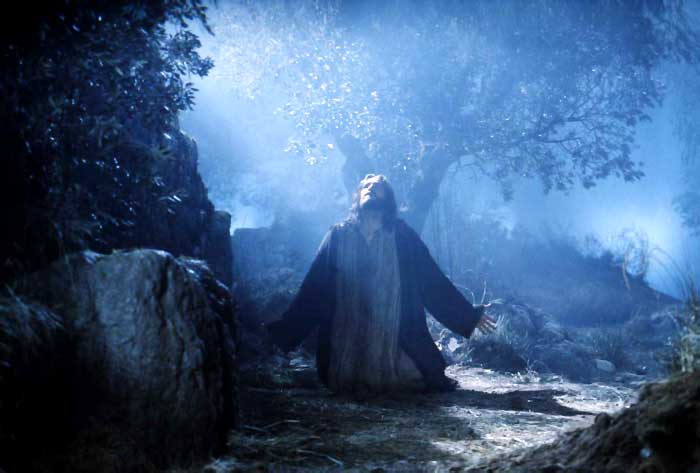
Let me show you what I mean. We read in Mark Chapter 14:

And they came to a place which was named Gethsemane: and he saith to his disciples, Sit ye here, while I shall pray.
And he taketh with him Peter and James and John, and began to be sore amazed, and to be very heavy;
And saith unto them, My soul is exceeding sorrowful unto death: tarry ye here, and watch.
And he went forward a little, and fell on the ground, and prayed that, if it were possible, the hour might pass from him.
And he said, Abba, Father, all things are possible unto thee; take away this cup from me: nevertheless not what I will, but what thou wilt.
And he cometh, and findeth them sleeping, and saith unto Peter, Simon, sleepest thou? couldest not thou watch one hour?
Watch ye and pray, lest ye enter into temptation. The spirit truly is ready, but the flesh is weak.
And again he went away, and prayed, and spake the same words.
And when he returned, he found them asleep again, (for their eyes were heavy,) neither wist they what to answer him.
And he cometh the third time, and saith unto them, Sleep on now, and take your rest: it is enough, the hour is come; (Mark 14:32-41)

The first thing that I would like to say is that the Atonement was wrought in order to satisfy the demands of justice (Mosiah 15:9, Alma 34:16) that were placed upon the whole human race as result of the Fall of Adam. Both the Fall and Atonement were necessary for us to first come to earth and obtain bodies, and then to overcome the physical (which includes the Resurrection) and spiritual imperfection that is characteristic of the mortal experience.

With that said, I second ask you to take note of the action of the Apostles Peter, James, and John on this fateful and necessary evening in early Spring. Christ asked them to be vigilant, but they were unable, even on multiple occasions. Now, many would harp in these three (who I might add were possibly Jesus' three most dedicated disciples at the time) because they could not stay awake. In like manner, many ridicule and vilify Peter who later denied knowing Christ thrice as a fulfillment of prophecy. However, doing so in my mind is not entirely appropriate, and is evidence of our own imperfections. I say this because such acts that we find in the Gospels were the absolute essence of the Atonement, illustrating man's need for it. The three Apostles were physically unable to hold on, as Jesus passed through the Atonement alone. It was those very imperfections for which the Atonement was performed, and in mind these things were almost necessary that Christ could empathize perfectly the state in which we find ourselves on a daily basis. This is "Meta-Atonement." How grateful am I for this example, as well as the entire gift that is the Atonement of Jesus Christ! In April, 2009, Elder Jeffrey R. Holland of the Quorum of the Twelve Apostles said the following:

Brothers and sisters, one of the great consolations...is that because Jesus walked such a long, lonely path utterly alone, we do not have to do so. His solitary journey brought great company for our little version of that path—the merciful care of our Father in Heaven, the unfailing companionship of this Beloved Son, the consummate gift of the Holy Ghost, angels in heaven, family members on both sides of the veil, prophets and apostles, teachers, leaders, friends. All of these and more have been given as companions for our mortal journey because of the Atonement of Jesus Christ and the Restoration of His gospel. Trumpeted from the summit of Calvary is the truth that we will never be left alone nor unaided, even if sometimes we may feel that we are. Truly the Redeemer of us all said: “I will not leave you comfortless: [My Father and] I will come to you [and abide with you] (John 14;18).

May you all have a great week, thinking on the Atonement, and its infinite applicability!